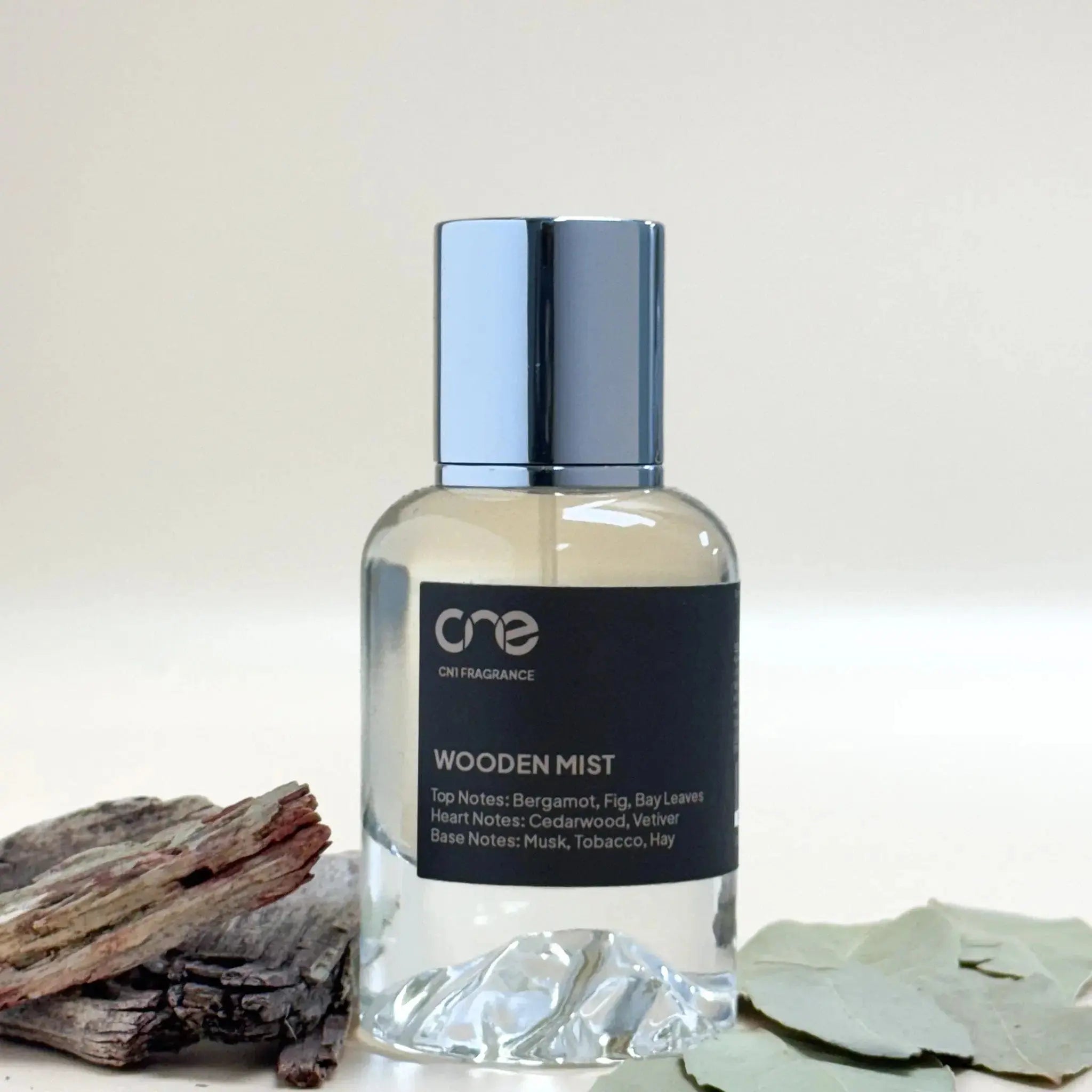
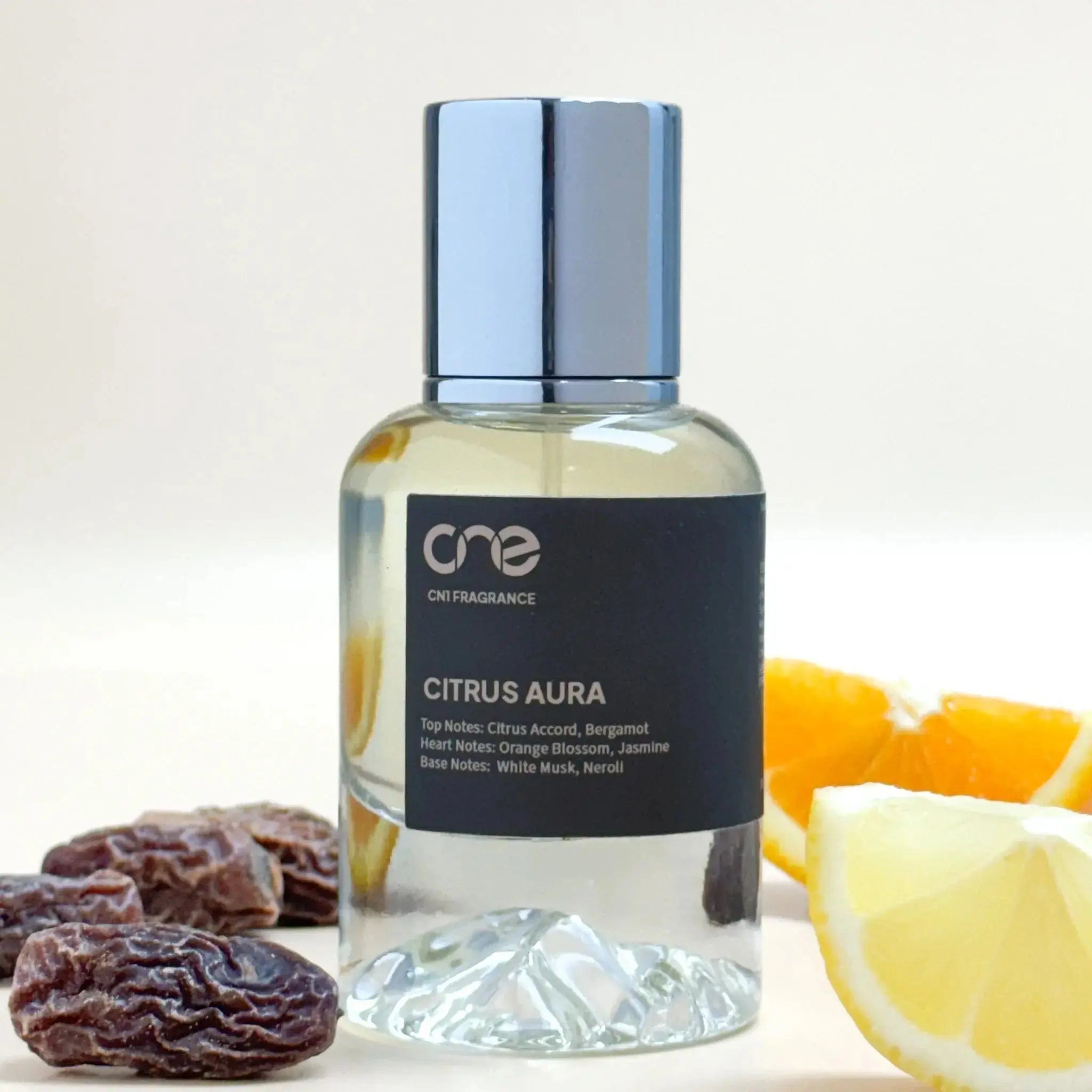
Finding a signature scent means identifying a fragrance that suits your body chemistry, matches how you actually live, and feels like you rather than like a trend. The process comes down to four steps: learn which scent family you're drawn to, test fragrances on skin rather than paper, wear each candidate for a full day before deciding, and choose based on how often you'd reach for it — not on how impressive it smells in the first thirty seconds.
Most people skip straight to buying. That's why the average fragrance drawer holds three or four bottles that got worn twice. Here's the version that works.
Step 1: Find your scent family first
There are hundreds of thousands of fragrances on the market. There are about seven families. Starting with the family narrows the field by roughly 99% before you smell anything.
- Floral — rose, jasmine, peony, orange blossom. The largest family and the most varied. Can be soft and powdery or sharp and green.
- Citrus — bergamot, lemon, grapefruit, mandarin. Bright and immediate. Tends to be the shortest-lived on skin, which is a feature if you like a scent that fades by afternoon.
- Woody — sandalwood, cedar, vetiver, oud. Dry, grounded, warm. Reads as understated and works year-round.
- Aquatic — marine accords, sea salt, ozonic notes. Clean and open. The default for people who say they don't like perfume.
- Spicy — cinnamon, cardamom, pepper, clove. Warm and assertive. Cold-weather territory.
- Oriental / Amber — resins, incense, benzoin, labdanum. Rich and enveloping. The heaviest family and the most polarizing.
- Vanilla / Gourmand — vanilla, tonka, caramel, praline. Sweet and comforting. Currently the most commercially dominant family in the U.S.
You almost certainly already know your answer. Think about the last three scents you noticed and liked — not perfumes necessarily. A wood shop. Cut grass. Someone's kitchen. Laundry off the line. Those associations map onto families more reliably than any quiz.
If you'd rather have it narrowed for you, describe what you like to the CN1 AI Scent Finder and it will suggest matching fragrances. Or browse by family: Floral, Citrus, Woody, Aquatic, Spicy, Oriental, or Fruity.
Step 2: Understand the note pyramid
Every fragrance is built in three layers that reveal themselves over time. This is why the bottle you loved at the counter can smell wrong two hours later.
Top notes last 5 to 15 minutes. Usually citrus or light herbs. This is the sales pitch — it's what's designed to grab you, and it's the part you should trust least.
Heart notes emerge around 20 minutes in and hold for two to four hours. Florals, spices, green notes. This is the actual character of the fragrance.
Base notes appear after an hour and can last eight or more. Woods, musk, amber, vanilla. These are the molecules that linger on a scarf and that people associate with you.
The practical takeaway: your signature scent is decided by the base, not the top. If you love a fragrance's opening and feel neutral about its dry-down, you'll stop wearing it within a month. If you're indifferent at first spray but keep catching it on yourself at 4 p.m. and liking it, that's the one.
Every CN1 product page lists all three layers so you can read the structure before you buy.
Step 3: Test on skin, and only three at a time
Paper strips show you the top notes and nothing else. They don't carry your skin's warmth, oil, or pH — all of which meaningfully change how a fragrance develops. A scent that smells identical on paper can go sweet on one person and sharp on another.
The rules that actually matter:
- Three fragrances maximum per session. Olfactory fatigue is real and sets in fast. Past three, you're no longer smelling accurately.
- Spray on pulse points — inner wrists, base of the throat, inner elbows. Warmth drives projection.
- Don't rub your wrists together. The friction crushes the top notes and speeds up evaporation. Spray and let it dry.
- Skip the coffee beans. They don't reset your nose. Stepping outside for two minutes does more.
- Wait. Don't judge anything before the 30-minute mark.
Step 4: Live with it for a full day
This is the step almost everyone skips, and it's the one that separates a signature scent from an impulse buy.
Wear one candidate for an entire day. Not a wrist test — a real day, with your actual routine. Pay attention to four things:
- Do you notice it and like it at hour four?
- How does it behave in the environments you're actually in — a warm car, a cold walk, an office, a gym bag?
- Does anyone say anything? Unprompted comments are the strongest signal you'll get.
- Do you want to put it on again tomorrow?
That last question is the whole test. A signature scent isn't the most beautiful fragrance you've ever smelled. It's the one you reach for without deciding to.
Season, occasion, and when one bottle isn't enough
Heat amplifies fragrance. Cold suppresses it. The same bottle can feel light in January and overwhelming in July.
Warm months favor citrus, aquatic, and light florals — anything with lift and transparency. Cold months favor woody, spicy, amber, and vanilla, which need warmth to open up properly and can otherwise sit flat.
Most people who wear fragrance seriously end up with two: something bright for daytime and warm weather, something deeper for evenings and winter. That's not a failure to commit. It's how the category works.
If you're building toward that, a reasonable structure is one versatile daily scent, one warm-weather option, and one evening option. Three bottles covers nearly every situation, and at CN1 pricing that's genuinely achievable. Our Everyday Wear collection is a good place to find the first one.
Why testing costs less than it used to
The traditional obstacle to finding a signature scent was economic. At $120 to $300 a bottle, most people couldn't afford to be wrong more than once, so they bought whatever the counter recommended and lived with it.
That constraint doesn't hold anymore. Designer-inspired fragrances — often called impressions — let you explore a scent profile at a fraction of the original price. CN1 impressions are eau de parfum concentration and typically run 60 to 90% below the designer reference they're built from.
Practically, this changes the search. You can test four or five directions for less than the cost of one designer bottle, learn what you actually gravitate toward, and then decide whether you want to invest in an original composition or stay with the impression. Either outcome is fine. The point is that discovery stops being expensive.
Browse all CN1 fragrances, the Impression collection, or our in-house CN1 Originals. For more on what impressions are and how they differ from counterfeits, see our guide to designer-inspired fragrances.
Four mistakes that cost people years
Buying at the counter. Store air is saturated with fragrance and you've already smelled fifteen things. Your nose is compromised before you start.
Judging in under thirty minutes. You're evaluating the top notes, which is the part of the fragrance you'll experience for the smallest fraction of the time you wear it.
Choosing a scent for a version of yourself that doesn't exist. The dramatic evening fragrance is a great purchase if you have dramatic evenings. Buy for the life you have.
Confusing "expensive" with "right." Price reflects marketing spend, packaging, and brand positioning at least as much as it reflects what's in the bottle. Your nose doesn't read price tags.
Frequently asked questions
How long does it take to find a signature scent?
Most people need four to eight weeks of real testing. Narrowing to a scent family takes an afternoon; confirming that a specific fragrance is right takes several full days of wear.
Can I have more than one signature scent?
Yes, and most regular fragrance wearers do. A common structure is one daytime scent, one evening scent, and one seasonal alternate. What makes them signature is consistency of use, not exclusivity.
Why does the same perfume smell different on me than on someone else?
Skin pH, natural oil production, hydration, diet, and medication all affect how fragrance molecules develop. Drier skin holds fragrance for less time and can push sweet notes sharper. This is why testing on your own skin is non-negotiable.
Where should I apply fragrance so it lasts longest?
Pulse points — inner wrists, base of the throat, behind the ears, inner elbows. Applying to moisturized skin extends wear noticeably, since dry skin doesn't hold fragrance oils well.
How many sprays should I use?
Two to four for most eau de parfum. Start with two and add only if you can't detect it at the two-hour mark. If people can smell you before you enter a room, that's too many.
Do fragrances expire?
Most last three to five years unopened and one to three years after opening. Store bottles away from direct sunlight and heat — a bathroom windowsill is the fastest way to degrade a fragrance. The original box is the best storage container.
What's the difference between eau de parfum and eau de toilette?
Eau de parfum carries a higher concentration of fragrance oil and generally lasts longer on skin. All CN1 fragrances are eau de parfum. Our guide to fragrance concentrations explains the difference in full.
Where to start
Pick a scent family, choose two fragrances from it, and test them side by side. Test on skin, wait thirty minutes, and give each one a full day before you decide.
If you'd rather start from a conversation than a category, the AI Scent Finder will narrow it for you — tell it a fragrance you already like, a note you want, or the occasion you're buying for.